
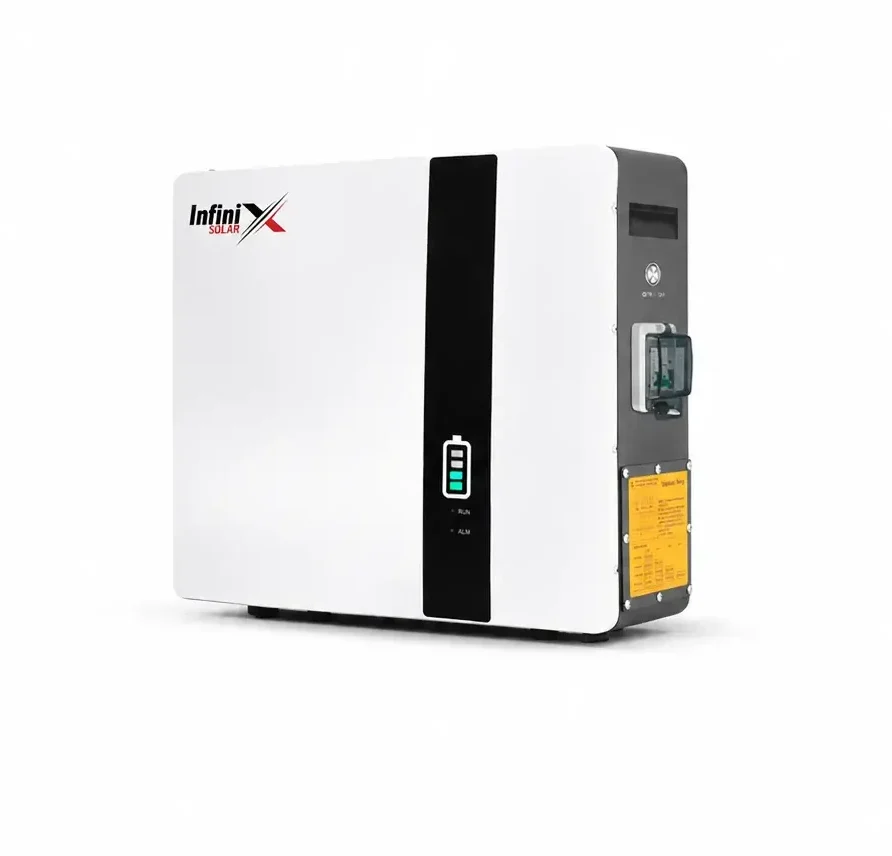
A good LiFePO4 battery is rated for thousands of charge cycles, which on paper is well over a decade of daily use. In practice, some batteries in Pakistan lose noticeable capacity in three or four years, while others are still strong after eight. The chemistry is the same. The difference is almost always heat, charge settings and how deeply the battery is worked every night.
Lithium iron phosphate needs far less care than a tubular battery (no water top-ups, no acid), but it is not zero-maintenance. Here is what actually extends its life.
Key takeaways
- Heat is the biggest enemy. Keep the battery shaded and ventilated; every sustained 10°C above room temperature speeds up ageing.
- Let the inverter talk to the battery through BMS communication instead of relying on voltage settings.
- Avoid running to 0% every night; a shutdown at 10–20% adds years of life.
- Check terminals, cables and firmware every few months; a loose lug can do more damage than the battery itself.
How long does a LiFePO4 battery really last?
Most LiFePO4 solar batteries are rated for roughly 4,000 to 6,000 cycles at around 80% depth of discharge before capacity falls to 70–80% of new. One cycle a day works out to 11 years or more. Those ratings are measured in the lab at about 25°C, though, and your battery rarely lives at 25°C.
1. Keep it cool and out of the sun
In a Lahore or Multan summer, a battery in an unventilated store room or on a sunny wall can sit at 45°C for weeks. That alone can cut its useful life sharply. Install it indoors or in a shaded, ventilated spot, keep a gap around it for airflow and never mount it above a stove or next to an inverter’s hot exhaust.
Cold matters too, in the north. Lithium should not be charged below 0°C. Most quality BMS units block charging automatically, but if you live in Murree, Swat or Gilgit, keep the battery in an insulated indoor space in winter.
2. Use BMS communication, not guesswork
A lithium battery’s voltage stays almost flat from 90% down to 20%, so an inverter that estimates charge from voltage alone is often wrong. Connect the battery’s BMS to the inverter (CAN or RS485) and select the correct lithium protocol. The inverter then charges to the battery’s own limits and reports a true state of charge.
3. Don’t drain it to zero every night
Depth of discharge has a large effect on cycle life. Setting the inverter to switch back to grid (or shut down) at 10–20% remaining gives the battery a buffer and noticeably extends life. On days with no load shedding, a higher reserve, such as 30–40%, keeps backup ready for surprise outages.
| Setting | Suggested value | Why |
|---|---|---|
| Low-battery cut-off | 10–20% SOC | Avoids stress of deep discharge |
| Back-to-grid point | 20–40% SOC | Keeps reserve for load shedding |
| Charge current | Within battery datasheet (often ≤0.5C) | Less heat, longer life |
| Charge source priority | Solar first | Uses free energy, cuts grid bills |
4. Charge at sensible currents
Fast charging is convenient but produces heat. Set the maximum charge current within the battery datasheet, commonly half its amp-hour rating or less. A 100Ah battery then charges at up to 50A. Solar charging during the day is naturally gentle; heavy grid charging at night is where people over-do it.
5. Match the IP rating to the location
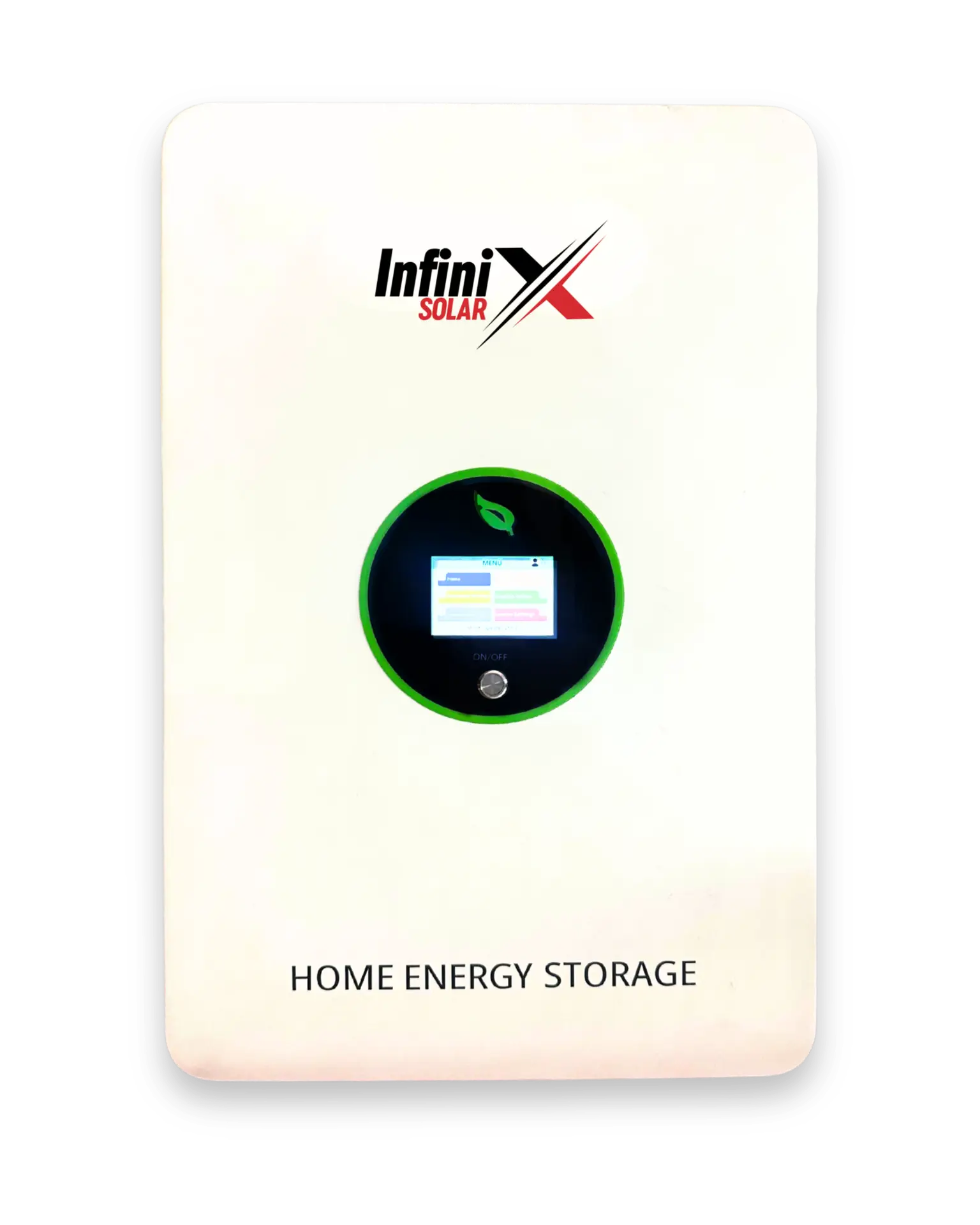
IP21 batteries are designed for clean, dry indoor spaces. If the battery must go in a garage, porch or dusty utility area, choose an IP54 or IP65 model built for it. Infinix offers wall-mounted lithium batteries in IP21, IP54 and IP65 versions for exactly this reason.
6. A simple quarterly check
- Look for warm or discoloured cable lugs, which are a sign of loose connections.
- Dust the vents and heat-sink area with a dry cloth.
- Check the app or display for cell-voltage imbalance or error codes.
- Ask your installer whether inverter or BMS firmware updates are available.
7. If you won’t use it for a while
Leaving a lithium battery at 100% or 0% for weeks is hard on it. If you are travelling or the system is shut down, leave the battery around 50–60% and switch it off with its own breaker so the BMS does not slowly drain it.
Lithium vs tubular: the maintenance difference
Tubular batteries need regular distilled-water top-ups, equalisation charges and ventilation for gassing, and they still wear out in a few years under daily cycling. LiFePO4 skips all of that. We compared the full ten-year cost in lithium vs tubular batteries.
Frequently asked questions
Should I charge my lithium battery to 100% every day?
Reaching 100% from solar during the day is fine, and it lets the BMS balance the cells. What shortens life is sitting at 100% in high heat for long periods.
Why is my lithium battery percentage jumping?
Usually because the inverter is reading voltage instead of talking to the BMS. Set up BMS communication and the percentage becomes accurate.
Choosing or setting up a lithium battery?
Our team can match an Infinix LiFePO4 battery to your inverter and configure the settings for maximum life. Message us with your inverter model.