

A tubular battery looks cheaper. On the shelf it usually is. The problem is that a battery is not really bought by the rupee — it is bought by the usable kilowatt-hour, multiplied by the number of times you can take it out again. Once you look at it that way, the ranking changes.
Here is the comparison without the sales pitch, using the two numbers that actually decide it.
Number one: how much of the battery you can actually use
A battery’s rating and its usable capacity are not the same thing.
A tubular lead-acid bank should not routinely be taken below about 50% depth of discharge. Go deeper and you shorten its life sharply. So a bank rated at 10 kWh gives you roughly 5 kWh you can use night after night.
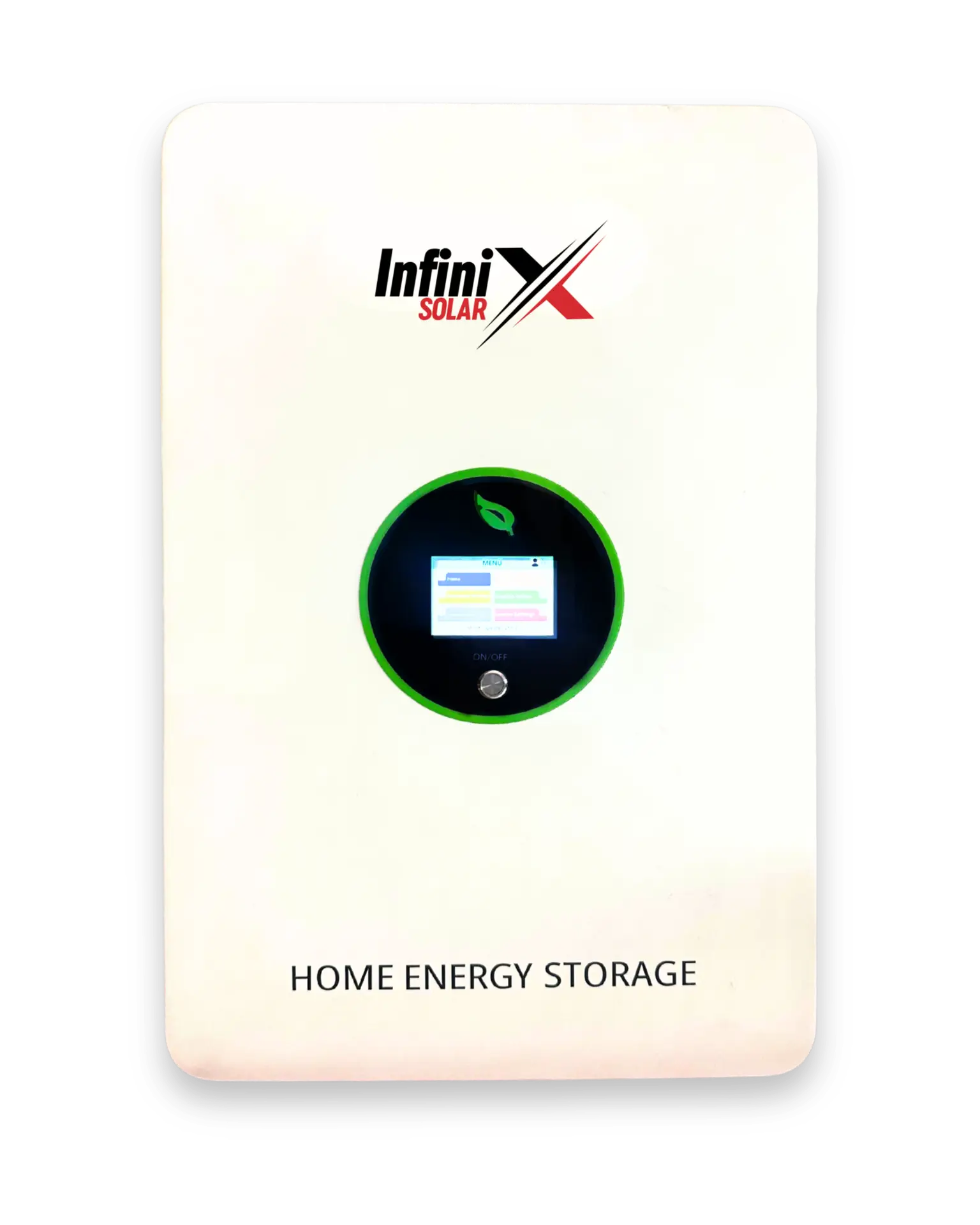
A LiFePO4 lithium battery is comfortable at 80–90% depth of discharge, every day, for years. A 10 kWh lithium battery gives you 8 to 9 kWh.
Before a single rupee is compared, the lithium battery is already delivering close to twice the energy from the same headline rating.
Number two: how many times you can do it
This is where the gap becomes uncomfortable.
| Tubular lead-acid | LiFePO4 lithium | |
|---|---|---|
| Usable depth of discharge | about 50% | 80–90% |
| Cycle life | roughly 500–1,200 | roughly 3,000–6,000 |
| Realistic life in Pakistani heat | 3–5 years | 8–12 years |
| Round-trip efficiency | 75–85% | 92–98% |
| Maintenance | distilled water top-ups, terminal cleaning | none |
| Weight for the same usable energy | heavy | roughly a third |
| Wall mountable | no | yes |
One cycle is one meaningful discharge and recharge. A solar battery in Pakistan does roughly one cycle a day. At 500 to 1,200 cycles, a tubular bank is into replacement territory in three to five years. At 3,000 to 6,000 cycles, a lithium battery is still working.
Putting the two together: cost per usable unit
The honest way to compare two batteries is not the sticker price. It is:
Purchase price ÷ (usable kWh × cycle life) = cost per usable unit delivered
Run that on a 10 kWh nominal bank of each type. Prices move constantly in Pakistan, so treat the rupee figures as placeholders and put your own quotes in — the structure of the calculation is the point.
| Tubular bank | Lithium battery | |
|---|---|---|
| Nominal rating | 10 kWh | 10 kWh |
| Usable per cycle | about 5 kWh | about 8.5 kWh |
| Cycle life used here | 800 | 4,000 |
| Total energy over its life | about 4,000 kWh | about 34,000 kWh |
| Assumed purchase price | Rs. 220,000 | Rs. 400,000 |
| Cost per usable unit | about Rs. 55 | about Rs. 12 |
The lithium battery costs nearly twice as much to buy and delivers energy at roughly a fifth of the cost, because it delivers eight times as much of it before it needs replacing. Over ten years the tubular route means buying two or three times over, plus the labour and the disposal each time.
The things the spreadsheet misses
- Heat. Lead-acid life is rated at around 25°C. A store room in Multan in June is not 25°C, and published cycle figures fall away quickly above that. Lithium degrades in heat too, but far more gradually.
- Water top-ups. Tubular batteries need distilled water on a schedule. Miss it for a few months and you have shortened a battery you paid for. Nobody factors the missed top-ups into the purchase decision, and almost everybody misses some.
- Charging speed. Lead-acid cannot absorb charge quickly at the top of its range. On a short winter day the bank may simply not finish charging before the sun goes. Lithium takes charge at full rate almost to the top.
- Efficiency. At 80% round-trip, one unit in five is lost as heat on the way through a lead-acid bank. At 95% it is one in twenty.
- Space and mounting. A wall-mounted lithium unit takes a metre of wall. An equivalent tubular bank takes floor space and ventilation.
When tubular still makes sense
It would be dishonest to say never. Tubular is still the reasonable choice when:
- The budget genuinely does not stretch, and the alternative is no storage at all.
- The battery will be cycled rarely — a pure standby bank for occasional outages rather than daily solar storage. Cycle life matters far less if you are not cycling it.
- You already own a healthy bank and your inverter supports it. Replacing working equipment early rarely pays.
What has changed is the default. For a system that cycles every single day — which is what solar storage in Pakistan now is, particularly since the move to net billing — the daily cycling is exactly the workload lead-acid handles worst.
What to check before you buy a lithium battery
Not all LiFePO4 is equal, and the gap between a good cell and a repackaged one is invisible from the outside. Ask for:
- Cell chemistry in writing. LiFePO4, not generic “lithium-ion”. The two behave very differently on safety and cycle life.
- Rated cycles and the DoD they are quoted at. “6,000 cycles” means nothing without the depth of discharge attached to it.
- BMS detail. Cell balancing, over-charge, over-discharge, over-current and temperature protection. The BMS is most of what you are paying for.
- IP rating, matched to where it will hang. An indoor utility room and an open verandah are different problems. IP21 is an indoor rating; something like IP54 is what you want if weather can reach it.
- Inverter compatibility and communication. The battery and inverter should talk, so charging is managed by state of charge rather than guessed from voltage.
- Warranty terms, and who honours them. A warranty is only as good as the local presence behind it.
The short version
Tubular is cheaper to buy and more expensive to own. Lithium is more expensive to buy and cheaper per unit delivered, by a wide margin, as long as you are cycling it daily. If the battery is going to work every day, the cheaper battery is the lithium one.
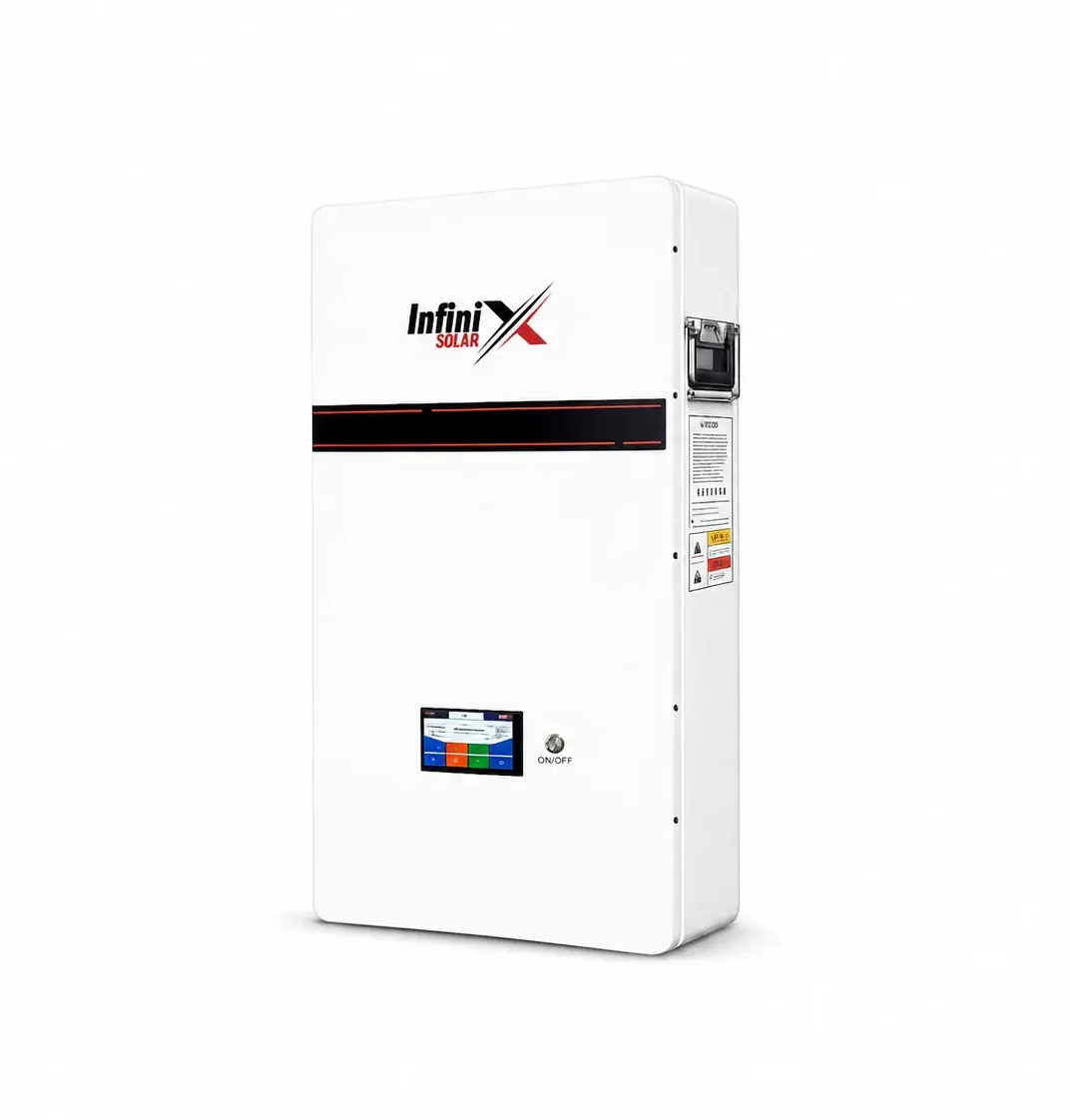
Our wall mounted LiFePO4 batteries come in indoor and weather-resistant versions with full BMS protection, and our hybrid inverters are built to communicate with them. If you want help matching a battery to your actual nightly load rather than to a round number, talk to us.
Talk to an Infinix solar expert
Share your monthly units, load-shedding hours and the appliances you need to run. We will recommend the right Infinix hybrid inverter and lithium battery, with a clear itemised price.
Related reading
- Net metering to net billing: what NEPRA’s 2026 rules mean for your bill
- What size solar inverter do you need? A load guide for Pakistani homes
- Hybrid, on-grid or off-grid inverter: which one does your house need?
- LiFePO4 battery care: how to make a lithium battery last 10+ years
- Solar backup for load shedding: how many hours will your battery run?
Prices, cycle figures and lifespans in this article are indicative ranges drawn from published manufacturer and market data, and vary by brand, model and operating conditions. Ask for the specification sheet of the exact model you are considering before deciding.
Need help choosing?
Send us your electricity bill or appliance list. Our Lahore team will suggest the right Infinix inverter and battery, and share the latest price.
WhatsApp 0321-0911151Contact Us