
Ask five dealers how many batteries you need and you’ll get five answers. The good news: you can work it out yourself, and it’s simpler than it sounds.
- List what runs at night, with watts and hours.
- Add it up to get kWh needed.
- Add a margin of about 20% for losses and ageing.
- Divide by the battery’s usable capacity.
Step 1: List your night-time loads
Only include what will actually run on battery, usually from sunset until the sun is strong enough again, or during night load shedding.
Step 2: Multiply watts by hours
Example for a typical family during a 10-hour night:
| Appliance | Watts | Hours | Wh |
|---|---|---|---|
| 4 ceiling fans | 4 x 75 = 300 | 8 | 2,400 |
| 6 LED lights | 6 x 12 = 72 | 5 | 360 |
| Fridge (average) | ~100 | 10 | 1,000 |
| WiFi router, phone charging | ~30 | 10 | 300 |
| TV | 100 | 3 | 300 |
| Total | 4,360 Wh |
Step 3: Add a margin
Inverters lose a little energy converting battery power to AC, and batteries slowly lose capacity with age. Add about 20%: 4,360 x 1.2 = roughly 5.2kWh.
Step 4: Match to battery capacity
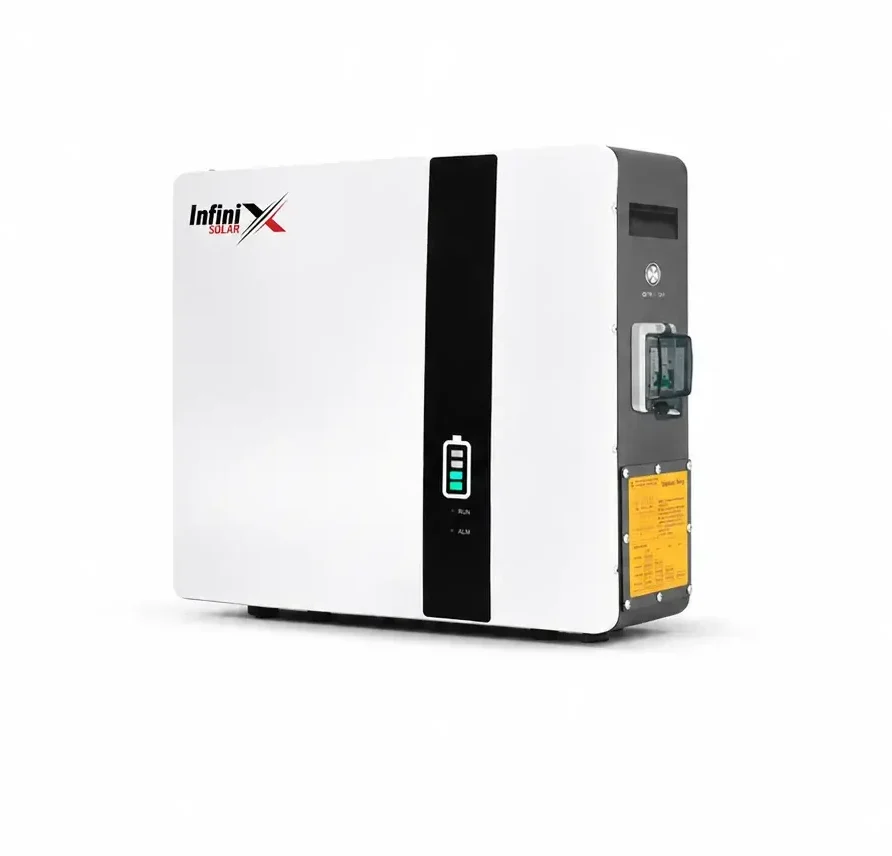
A 5kWh lithium battery with about 90% usable gives roughly 4.5kWh. So for this family, one 5kWh battery covers most nights, and a second would give comfortable margin for longer outages or cloudy days. With tubular batteries at about 50% usable, you’d need roughly double the rated capacity.
What about AC at night?
Add a 1.5 ton inverter AC running 8 hours at an average of around 900W and you add about 7kWh. That roughly doubles or triples the battery. It’s possible, but plan the budget honestly. See AC on solar.
Can solar fill it?
Batteries need to recharge the next day. Make sure your panels can cover daytime use plus refilling the battery, especially in winter. Otherwise you’ll have a big battery that’s never full.
The load calculator does this maths for you and suggests battery size. For battery types, see DoD and cycle life explained.
Want us to size your battery?
Send your night-time appliance list and backup hours. We’ll reply with a battery suggestion.