
The question most families ask when they buy solar is not about payback. It is simpler: when the light goes at 9 pm, how long will the fans keep running?
The answer comes from one small formula and an honest list of what you switch on. Here is how to work it out before you buy, so the backup you pay for is the backup you get.
Key takeaways
- Backup hours ≈ usable battery kWh × 0.9 ÷ running load in kW.
- A 5kWh lithium battery runs a typical fans-lights-fridge-TV load of about 750W for roughly 5 to 6 hours.
- One inverter AC can cut that to around 2 hours, so decide in advance what the battery must carry.
- Dual-output inverters and daytime solar charging stretch backup without buying a bigger battery.

The backup formula
Backup hours = (battery kWh × usable %) × inverter efficiency ÷ load in kW
- Battery kWh: a 51.2V 100Ah lithium battery is about 5.1kWh.
- Usable %: around 80–90% for LiFePO4 if you keep a small reserve; only about 50% for tubular lead-acid.
- Inverter efficiency: roughly 90% on battery.
- Load in kW: add up what actually runs together during the outage.
A worked example for a typical home
| Appliance | Quantity | Watts each | Total |
|---|---|---|---|
| Ceiling fan (standard) | 5 | 75W | 375W |
| LED lights | 10 | 10W | 100W |
| Refrigerator (average draw) | 1 | 150W | 150W |
| LED TV | 1 | 80W | 80W |
| Wi-Fi router & phone charging | – | 40W | 40W |
| Total running load | ~745W |
With a 5.1kWh lithium battery, using 85% and 90% inverter efficiency: 5.1 × 0.85 × 0.9 ≈ 3.9kWh available. Divided by 0.745kW, that is about 5.2 hours of backup.
Swap the ceiling fans for inverter (DC/BLDC) fans at around 35W each and the load drops to about 545W, stretching the same battery to roughly 7 hours.
What about the AC?
A 1.5-ton inverter AC typically draws 1,000–1,500W once it settles, and more at start-up. Add one to the example above and the load jumps to roughly 2kW, cutting backup to around 2 hours. Running ACs through the night on battery usually needs 10kWh or more of storage.
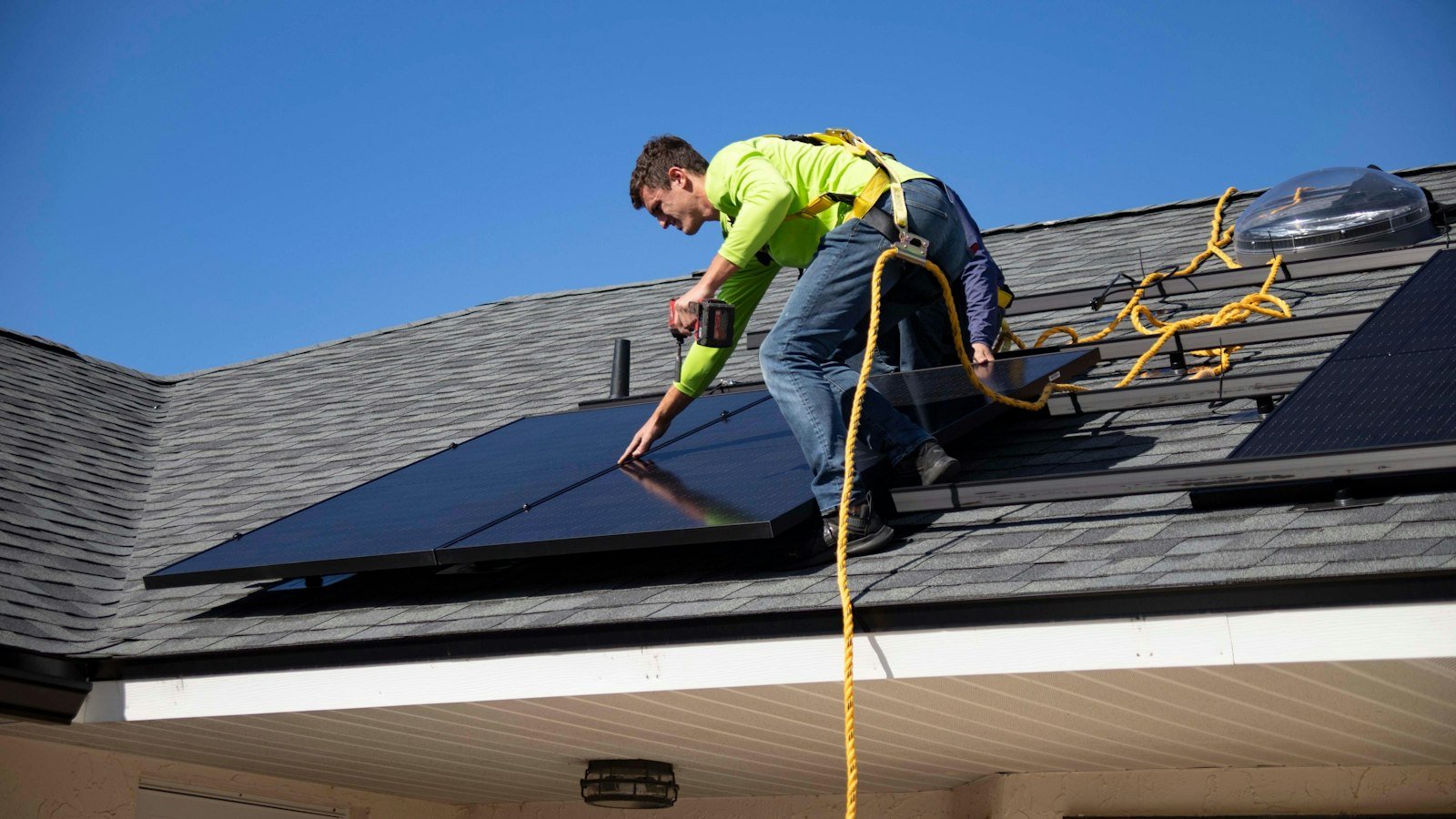
A practical middle path: run the AC on solar during the day (when it is actually hottest) and keep the battery for fans and lights at night.
Five ways to stretch your backup
- Use a dual-output inverter. Heavy loads go on the second output, which the inverter cuts automatically when the battery gets low. Models like the Empire V III Twin and Prism VM4 Twin do this.
- Recharge from solar, not just the grid. Make sure the array can fill the battery by late afternoon, even in winter.
- Set a sensible reserve. Keep 20–30% in the battery as a buffer for a second outage.
- Replace the biggest energy users. Inverter fans and an efficient fridge free up hours of backup.
- Plan the evening peak. Run the iron, washing machine and water pump while the sun is up.
Hybrid, off-grid or on-grid for load shedding?
Only hybrid and off-grid systems provide backup. A plain on-grid inverter switches off when the grid goes down, even at noon, for safety. We explain the difference in hybrid vs on-grid vs off-grid inverters.
How much battery do you need?
| Outage pattern | Load (no AC) | Suggested lithium storage |
|---|---|---|
| 1–2 hours at a time | ~750W | 2.5 – 5kWh |
| 3–4 hours in the evening | ~750W | 5kWh |
| 6+ hours or overnight | ~750W | 10kWh |
| Evening AC use | ~2kW | 10 – 15kWh |
Not sure what your load really is? Our inverter sizing guide shows how to read it off your bill and appliances.
Frequently asked questions
How long will a 5kWh battery last during load shedding?
For a typical home load of 700–800W (fans, lights, fridge, TV), about 5 to 6 hours. With an AC running, closer to 2 hours.
Is the switch-over noticeable?
Hybrid inverters in UPS mode switch in around 10 milliseconds, fast enough that computers and routers stay on.
Plan your load-shedding backup
Share your outage hours and the appliances you want to keep running. We will size an Infinix hybrid inverter and lithium battery that covers them, without over-selling capacity you won’t use.