
Solar quotes are full of kW and kWh. A “5kW system”, a “5kWh battery”, “600 units a month”. They look similar, but they measure completely different things. Once you understand the difference, quotes, bills and battery sizes suddenly make sense.
- kW (kilowatt) is power: how much can flow at one moment.
- kWh (kilowatt-hour) is energy: power used over time.
- One kWh is one “unit” on your electricity bill.
- Inverters and panels are rated in kW; batteries and bills in kWh.
Think of water in a pipe
kW is like the width of a pipe: how much water can flow through it right now. kWh is like the bucket that fills up over time. A wide pipe running for a short time can fill the same bucket as a narrow pipe running for a long time.
kW: power, right now
A 1.5 ton inverter AC might draw around 1 to 1.5kW while running hard. A fan might draw 0.08kW (80 watts). Add up everything running at the same moment and you get your load in kW. This number decides your inverter size. If your peak load is 4kW, a 3kW inverter will trip.
Panels are rated in kW too. Ten 585W panels make a 5.85kW array, which is the most it can produce in ideal sunlight, not what it produces all day.
kWh: energy, over time
If that 1kW AC runs for 5 hours, it uses 5kWh. Your electricity bill counts kWh and calls them “units”. So a bill showing 450 units means 450kWh that month.
Batteries are rated in kWh because they store energy. A 5kWh battery can, in theory, supply 1kW for 5 hours, or 2.5kW for 2 hours. In practice you leave some reserve and lose a little to conversion. See how much battery you need for the night.
Putting it together
A 5kW solar array in Pakistan produces very roughly 18 to 22kWh on a good day, depending on season, tilt, heat and dust. Over a month that is around 550 to 650 units. That is why a 5kW system often suits a home using 500 to 600 units a month. Our guide on monthly units from solar goes deeper.
Where people go wrong
- Buying inverter size from the bill: the bill tells you kWh, but the inverter must handle your peak kW.
- Buying battery size from the inverter: a 6kW inverter doesn’t mean you need a 6kWh battery. Battery size depends on how long you need backup.
- Expecting rated kW all day: panels hit near their rating only around midday in good sun.
Quick checklist before buying
- Find your monthly units (kWh) from 12 months of bills.
- List the loads that may run together to estimate peak kW.
- Decide how many hours of backup you want, then size the battery in kWh.
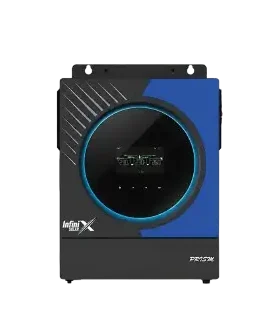
With these three numbers, the Infinix Solar team can recommend an inverter, panel count and battery that fit, instead of guessing.
Not sure what your numbers are?
Send us a photo of your electricity bill and a list of your main appliances. We’ll work out kW and kWh for you.