
Every July, the same two questions show up on our WhatsApp: “Will rain damage my panels?” and “Why did my inverter show an error after the storm?” The first answer is almost always no. The second usually has something to do with water getting where it shouldn’t.
- Check MC4 connectors and cable entries for gaps.
- Keep the inverter out of direct rain unless it’s rated for outdoors.
- Look for water pooling near batteries or the DC box.
- Check the earth pit and surge protection before storm season.
Panels and rain: no problem
Solar panels are sealed units designed to sit outdoors for decades. Rain actually helps by washing off dust. Output drops on cloudy days, of course, but the panels themselves are fine. What can go wrong is around the panels: loose connectors, cables lying in pooled water, or structures that rust.
What does IP65 mean?
IP stands for Ingress Protection. The two digits tell you how well a device keeps out solids and water.
- First digit (dust): 6 means dust-tight.
- Second digit (water): 5 means protected against water jets, 6 against strong jets, 7 against temporary immersion.
So an IP65 inverter or battery can handle dust and rain splashes. An IP20 or IP21 unit, which is common for indoor inverters, must stay indoors or under proper cover.
Where to put the inverter
Most home hybrid inverters are indoor units. Install them in a shaded, dry, ventilated spot: a porch wall under a roof, a stair landing, or a utility room. Never in a spot where rain blows in sideways, and never right next to a bathroom wall that seeps.
Batteries and water
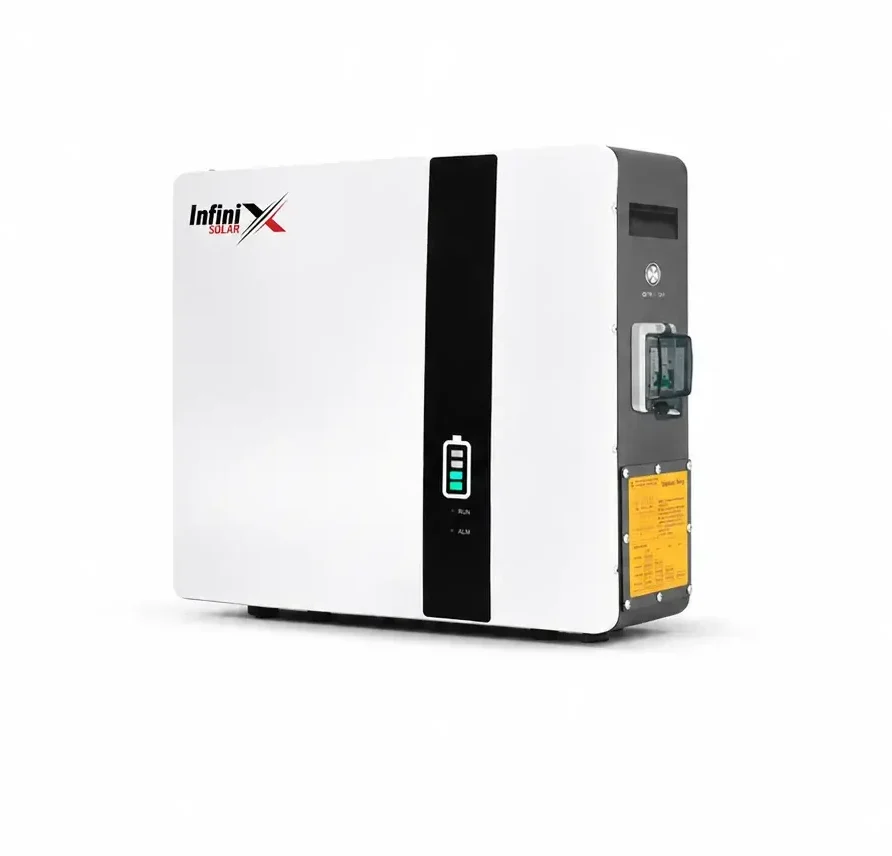
Lithium batteries rated IP65, like the Infinix 5kWh wall-mount unit, are more forgiving, but it’s still smart to keep any battery off the floor and away from places that flood. Ground-floor store rooms in low-lying streets are a common risk in Karachi and Lahore during heavy rain.
Connectors and cables
Most monsoon faults we see come from MC4 connectors that were never properly clicked shut, or cable entries into the DC box left open. Water gets in, the inverter detects an insulation fault, and it shuts down until things dry. Proper glands, sealed connectors and cables clipped off the roof surface prevent most of this.
Structure rust
Mild steel structures without proper galvanising start rusting after a couple of monsoons. Check welds and bolts for red rust. Treat small spots early with anti-rust paint before they spread.
After a storm
- Look at the panels for cracks or debris.
- Check the inverter screen or app for fault codes.
- If you see an insulation or earth fault that doesn’t clear once the roof dries, call your installer.
Lightning is the other monsoon risk. Our earthing and lightning guide covers what protection you need.
Inverter acting up after rain?
Send us the fault code and a photo of your setup. We’ll help you find the cause.