
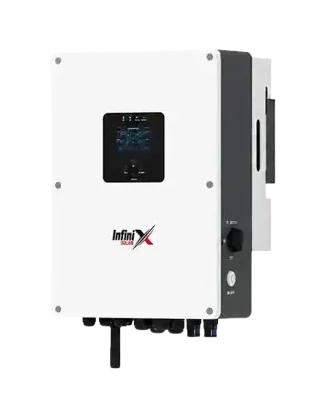
You may hear your installer mention “zero export” or “export limit.” It’s a setting found on many hybrid and on-grid inverters that controls whether, and how much, solar power can flow out to the grid.
- Zero export stops the inverter from sending power to the grid.
- A CT sensor or smart meter tells the inverter how much the house is using.
- Solar output is reduced to match the house’s use.
- Useful before net billing approval, or where export isn’t allowed.
How it works
A small sensor, usually a CT (current transformer) clamp or a compatible energy meter, is fitted on the main incoming cable. It tells the inverter, many times a second, whether power is flowing into the house from the grid or out to it. With zero export active, the inverter reduces its solar output whenever it detects power about to flow out.
When it’s used
- Before net billing approval: some owners keep export off until their net billing connection is approved and the right meter is installed.
- Where export isn’t permitted on a particular connection.
- Commercial sites that only want solar to offset their own use.
- Some generator setups, where pushing power back would cause problems.
Rules and procedures around export can change, so follow your distribution company’s current requirements and your installer’s advice for your connection.
What it means for your units
With zero export, the inverter only produces what your house is using at that moment, plus whatever goes into charging the battery. On a sunny afternoon with a full battery and little load, your panels can produce more than the inverter lets through. Your app will show lower solar units, but nothing is wrong. Power is simply being left unused.
How to make the most of it
- Run heavy appliances like motors, washing and AC pre-cooling during sunny hours.
- Keep a battery charging during the day so solar has somewhere to go.
- Consider moving to net billing if your solar is often limited and the economics make sense.
Partial export limits
Instead of zero, some systems allow a limit, for example a maximum of 2kW exported. This is useful when there’s a cap on what your connection can export.
Check the CT
If the CT clamp is installed backwards or on the wrong cable, the inverter misreads the flow and either exports anyway or limits too much. If your app numbers look odd after installation, ask your installer to double-check its direction and position.
For daytime usage tips, see use more of your own solar.
Questions about export settings?
Tell us your inverter model and connection type. We’ll explain the options for your setup.