

Two hybrid inverters can both say “6kW” on the box and behave completely differently on your roof. One accepts 7,000W of panels, runs without a battery and can be paralleled later; the other clips your array at noon and shuts down the moment the battery is removed.
The kW rating is only the first line of the datasheet. These are the nine specifications that decide whether a hybrid solar inverter suits a Pakistani home.
Key takeaways
- Match maximum PV input and PV current to the panels you plan to buy, not just the kW rating.
- A wide MPPT voltage range gives more flexibility in string design and more early-morning output.
- Choose 48V battery systems for 5kW and above; they run cooler and more efficiently.
- Battery-free operation, dual output and parallel capability protect you as your needs grow.
1. Rated power and surge capacity
Rated (continuous) power is what the inverter can deliver all day; surge is what it can handle for a moment when a motor starts. Fridges, water pumps and AC compressors can draw two to three times their running power at start-up. Size the inverter to the loads that run together, then check the surge figure covers your largest motor. Our inverter sizing guide walks through the calculation.
2. Maximum PV input power
This is how many watts of panels the inverter can accept. Good hybrid inverters allow the array to be larger than the AC rating, because panels rarely produce their full nameplate. The Blaze Gold VM II 3kW, for example, accepts 4,000W of PV, and the Empire V III Twin 6kW accepts 7,000W.
3. MPPT voltage range
The MPPT (maximum power point tracker) range sets how many panels you can put in a series string. A wide range such as the 60–450V on the Smart VM III Twin 4kW lets the inverter start earlier in the morning, keep working on cloudy days and suit more roof layouts.
4. Maximum PV input current
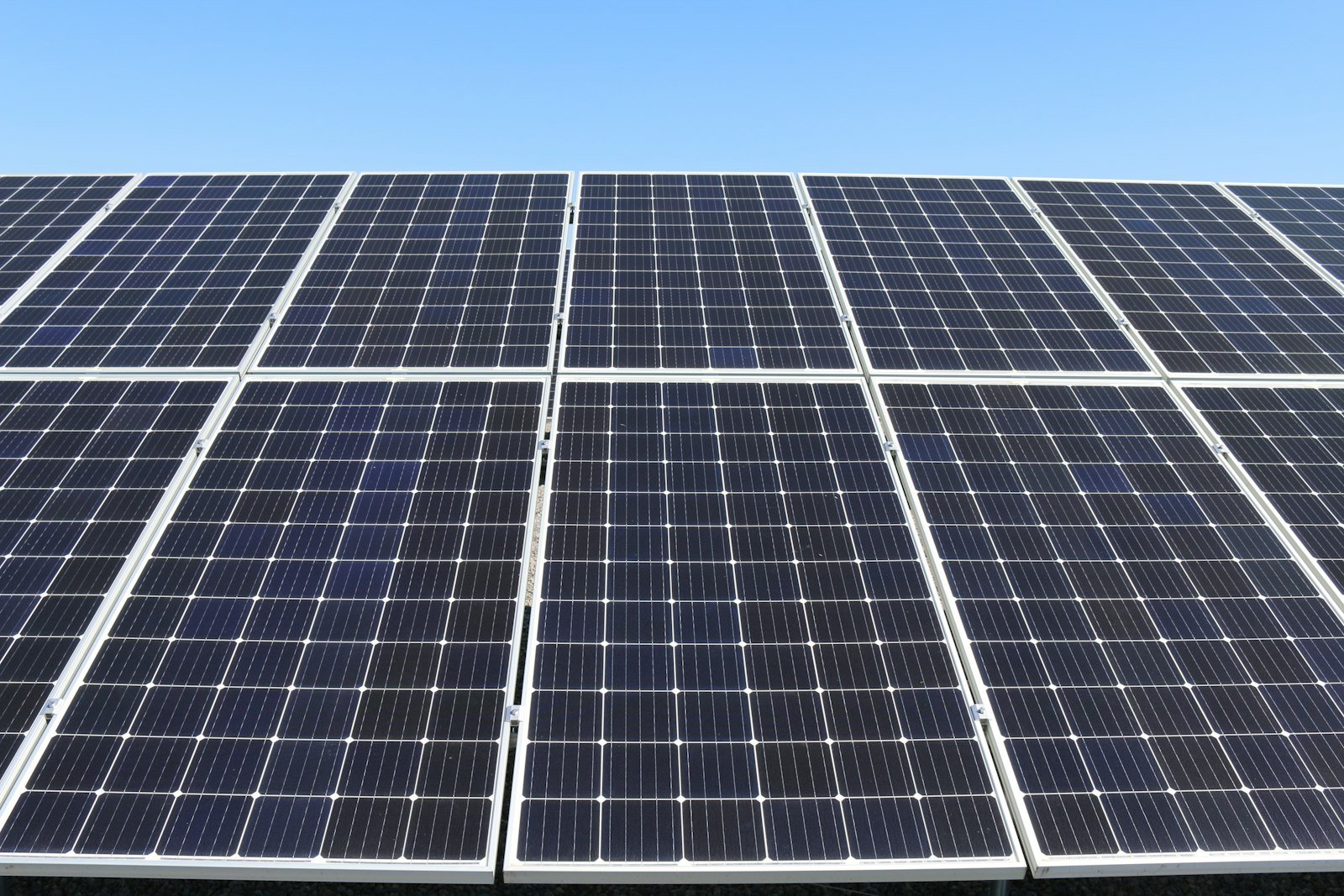
This spec is quietly becoming the most important one. Modern 550–585W N-type panels produce around 13–14A. If the inverter’s MPPT is limited to 13A, it cuts off a slice of your output every sunny day. Check that the inverter’s maximum PV current is comfortably above your panel’s short-circuit current (Isc).
5. Battery voltage: 24V or 48V
For the same power, a 48V system draws half the current of a 24V one, which means thinner cables, less heat and better efficiency. 24V is fine for 3kW and below; for 5kW and above, 48V is the sensible choice. Also confirm the inverter supports lithium BMS communication so it can read the battery’s real state of charge.
6. Battery-free operation
Some hybrid inverters refuse to run without a battery connected. Others, like the Recon V4 Twin 6kW, can run directly from panels and grid. That lets you start solar now and add a lithium battery later when budget allows.
7. Dual output and smart load management
Dual-output (“twin”) inverters split loads into essential and non-essential outputs. When the battery drops, the inverter automatically cuts the heavy non-essential circuit and keeps lights, fans and the router running for longer during load shedding.
8. Parallel capability and three-phase options
If your load may grow, choose a model that can be paralleled. Two identical units working together double capacity without replacing anything. For larger homes, offices and factories, three-phase hybrids such as the Everon HYD 15/20kW and Everon 80–125kW balance power across all three phases.
9. Protection rating, monitoring and warranty
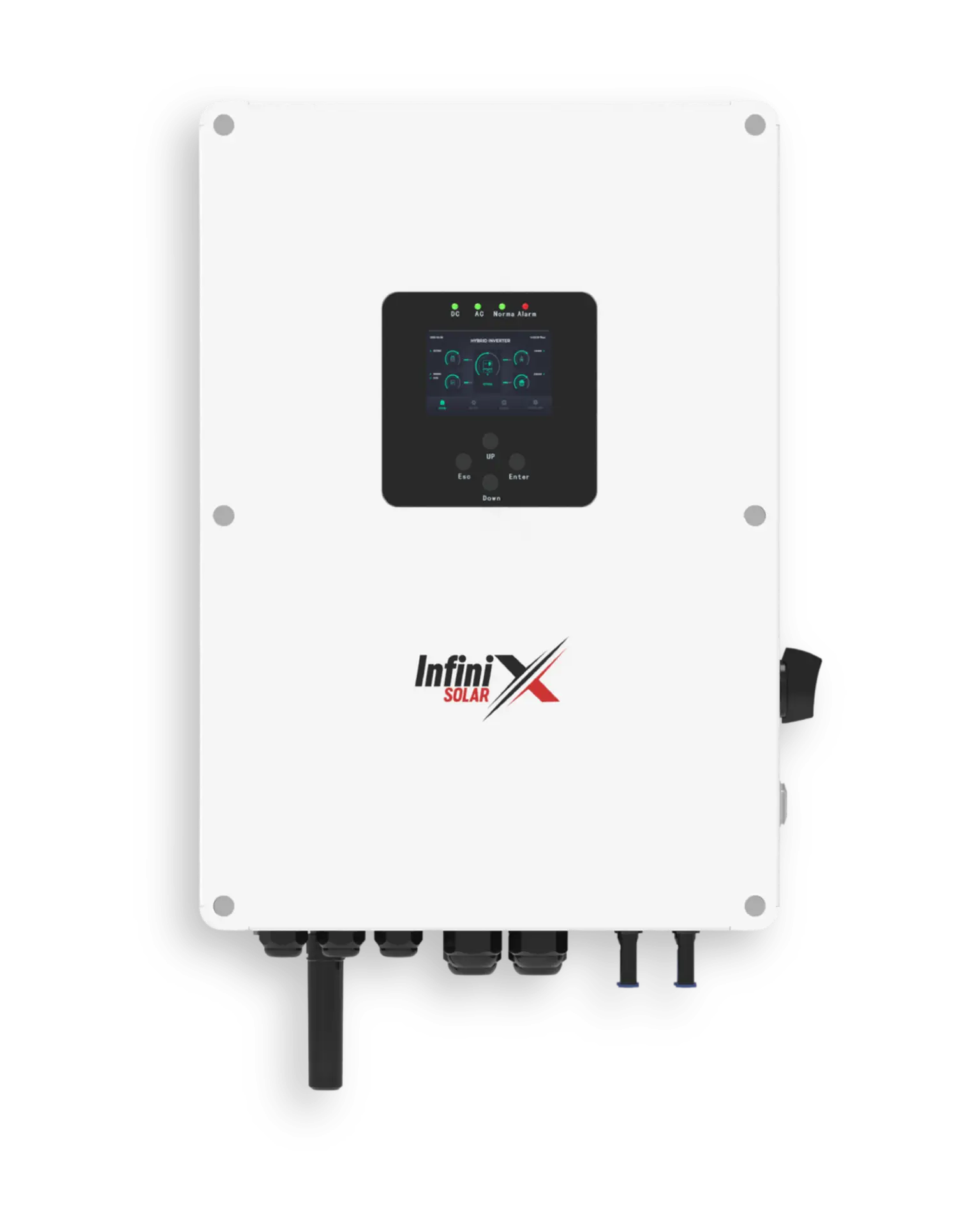
- IP rating: IP21 units belong indoors in a ventilated space; IP65 units can handle dust and rain.
- Wi-Fi monitoring: an app that shows production, consumption and battery state helps you catch problems early and shift loads into sunny hours.
- Warranty and service: a long warranty only matters if there is a local team to honour it. Ask where the service centre is.
Quick checklist before you buy
| Spec | What to look for |
|---|---|
| Rated power | Covers loads that run together |
| Max PV input | At least your planned array size |
| MPPT range | Wide range, suits your string design |
| Max PV current | Above your panel Isc (~14A for 580W panels) |
| Battery voltage | 48V for 5kW and above |
| BMS communication | Supports your lithium battery |
| Battery-free mode | Yes, if you may add storage later |
| Dual output / parallel | For load shedding and future growth |
| IP rating and warranty | Match install location; local service |
Frequently asked questions
What is the best hybrid inverter size for a house in Pakistan?
Most homes with 1–2 ACs fit a 5–6kW hybrid inverter. Smaller homes without AC often manage on 3–4kW. Size to the loads that run at the same time, not the total of every appliance.
Can a hybrid inverter work without a battery?
Some can and some cannot. Check the datasheet for battery-free or “battery-less” operation if you plan to add storage later.
Not sure which inverter fits your home?
Send us your load list or last electricity bill. We will recommend the right Infinix hybrid inverter, from 1.2kW to 125kW three-phase, and explain why.
Need help choosing?
Send us your electricity bill or appliance list. Our Lahore team will suggest the right Infinix inverter and battery, and share the latest price.
WhatsApp 0321-0911151Contact Us