
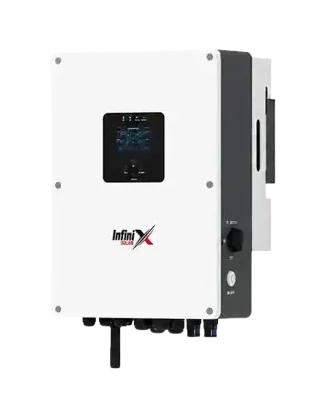
Dealers love to quote one number: kW. But two “6kW” inverters can behave very differently in your house. Here’s how to read the specs like an installer would.
- Rated output power and peak (surge) power
- Max PV input power and voltage
- MPPT voltage range and number of MPPTs
- Battery voltage, type support and max charge current
1. Rated output power
This is what the inverter can supply continuously, for example 6,000W. Your normal running load should stay comfortably below it, ideally with some margin.
2. Peak or surge power
For a few seconds, inverters can supply more than rated power to start motors, fridges and pumps. A higher surge figure means better handling of startup spikes.
3. Max PV input power
How many watts of panels the inverter accepts. Many hybrids allow somewhat more panel power than their AC rating, which helps on hazy days and in winter.
4. Max PV input voltage
The absolute limit for your panel string’s open-circuit voltage. Cold mornings raise panel voltage, so the string must stay safely below this number.
5. MPPT voltage range and number of MPPTs
The range where the inverter tracks maximum power. Your string’s working voltage should sit well inside it. Two MPPTs let you connect panels facing different directions. More in our MPPT guide.
6. Battery voltage and type
Usually 24V or 48V for home systems, sometimes high-voltage for bigger units. Check it supports lithium (and ideally communicates with the battery’s BMS) as well as lead-acid.
7. Max charge current
How fast it can charge your battery. A larger battery needs a higher charge current to fill during limited winter sun.
8. Efficiency and transfer time
Peak efficiency above about 93 to 97% is normal for modern units. Transfer time, how fast it switches when grid fails, matters for computers and sensitive equipment. Lower is better.
Also worth checking
- Operating temperature range, important for Pakistani summers
- IP rating, if it’ll be installed outdoors or in a dusty area
- WiFi or monitoring support
- Parallel capability, if you may expand later
Every Infinix product page lists the full datasheet. Browse the range here, or send us a competitor’s sheet and we’ll compare side by side.
Comparing inverters?
Send us the datasheets. We’ll highlight the numbers that matter for your home.