
Every week we speak to people who almost didn’t go solar because of something a neighbour, a relative or a WhatsApp forward told them. Some of these ideas were half-true years ago. Others were never true at all. Here are ten myths we hear most often in Pakistan, and what actually happens on a real rooftop.
- Solar works in winter and on cloudy days, just with lower output.
- A battery is not compulsory, but it decides what happens during load shedding.
- Bigger is not always better: size the system to your bill and your roof.
- Cheap, unbranded equipment is the most expensive mistake in solar.
Myth 1: Solar doesn’t work in winter
Panels run on light, not heat. In winter the days are shorter and fog or smog can reduce output in parts of Punjab, so production drops, but a well-designed system still produces every sunny day. In fact, panels work slightly more efficiently in cool weather. See our guide on winter solar output.
Myth 2: Cloudy days mean zero power
Light cloud cover reduces output, often sharply, but rarely to zero. Diffuse light still reaches the panels. A battery and grid connection cover the gap on heavy overcast days.
Myth 3: Solar can run everything in the house, all the time
Solar is sized, not magic. A 5kW system can run a lot during the day, but three ACs, a water motor and an iron at the same time will overload a small inverter. The right size depends on your actual loads. Start with the load calculator.
Myth 4: You must have batteries
An on-grid or hybrid system can run without batteries and still cut your bill. Without a battery, though, you will have no backup at night or during load shedding. It is a choice, not a rule.
Myth 5: More panels always means more savings
Extra panels only pay off if you can use or export the energy. Oversizing far beyond your consumption, or beyond what your inverter can handle, wastes money. Match the system to your bill.
Myth 6: Solar panels need constant cleaning
Dust does cut output, but a gentle rinse every couple of weeks in dusty months is usually enough. Harsh scrubbing or cleaning at midday on hot glass can do more harm than good.
Myth 7: All inverters are basically the same
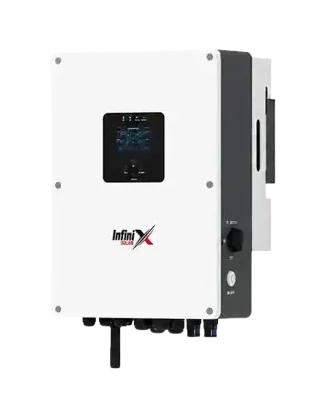
Inverters differ hugely in MPPT range, surge capacity, battery support, monitoring and build quality. The inverter is the brain of the system, which is why we explain every Infinix Solar inverter model in detail before anyone buys.
Myth 8: Solar will damage my roof
A properly installed structure is anchored and sealed. Leaks happen when holes are drilled carelessly or not waterproofed. Choose an installer who explains how the structure will be fixed.
Myth 9: Solar is only for rich people
Small systems for a fan, lights and a router during load shedding are within reach of many families, and shops often recover their cost faster than homes because they use power in daytime.
Myth 10: Once installed, you can forget about it
Solar is low-maintenance, not no-maintenance. Check the inverter app, keep panels reasonably clean and get the wiring inspected once a year.
The bottom line
Most solar disappointment comes from bad sizing or poor-quality parts, not from solar itself. Ask questions, read the spec sheets and buy from a seller who will still answer the phone after installation.
Heard something about solar you’re not sure of?
Ask the Infinix Solar team. We’ll give you a straight answer, even if it means you need a smaller system.